Views: …
Good morning, everyone. I’m Al Timberlane, and this is Good Morning Ozark American Journal™. Today is Friday, October 16, 2026. We believe. We care. We imagine.
We’re rooted in Mountain View, Arkansas—the Folk Music Capital of the World. Today, we’re coming to you from the University of Michigan, sharing music, family, faith, and what’s on my mind.
Before we begin, I want to offer a belated birthday remembrance for Charlie Kirk. We’re a few days late, but we’re remembering you, Charlie, and keeping your family in our prayers. May God bless your family and loved ones and bring them comfort and peace.

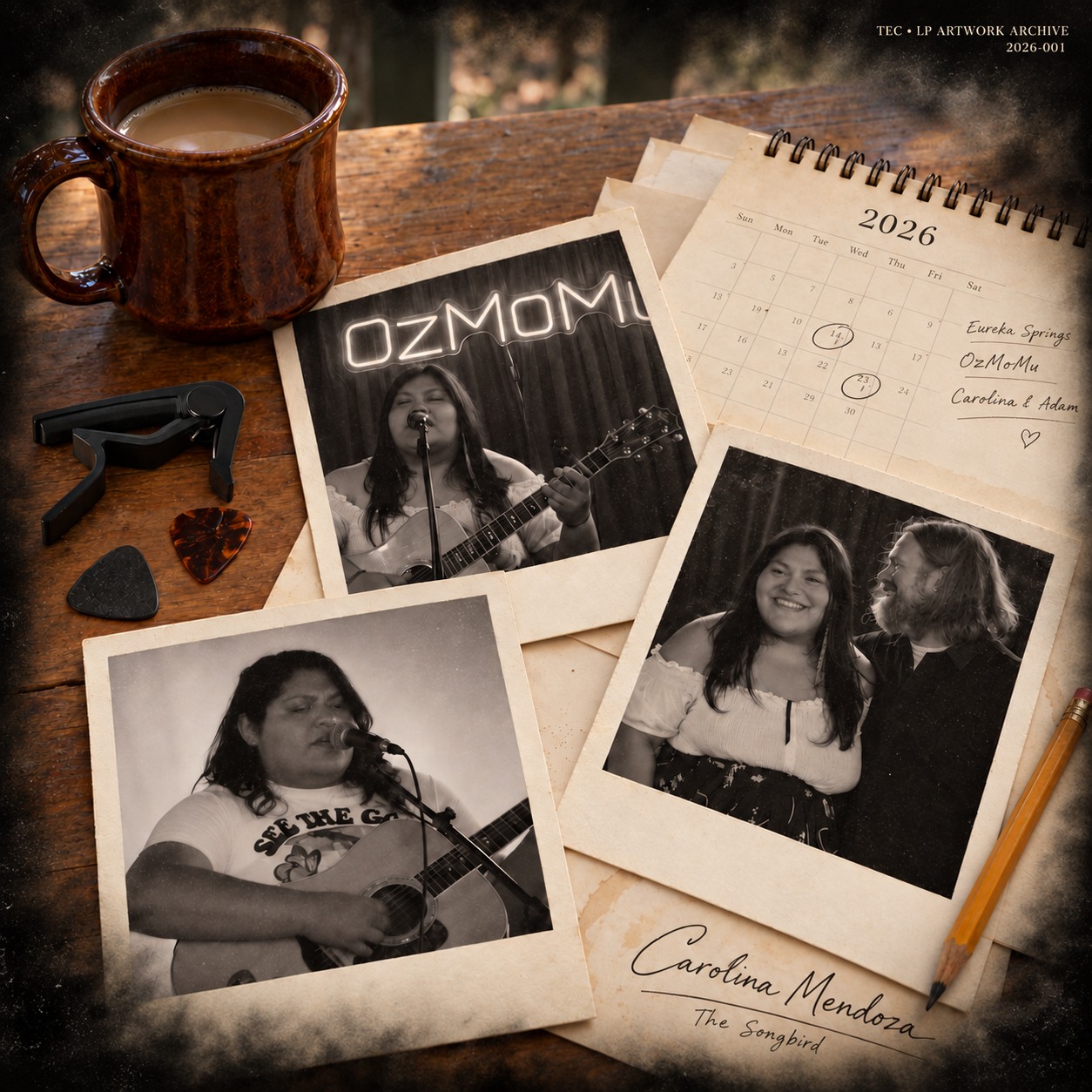
One of the blessings of this work is the friendships that grow around the music. I tend to dream for my musicians. They’re my friends. That’s why I call them “my musicians.” I hear a song, look at a photograph, and start imagining what we might create together.
Carolina Mendoza is one of those friends—an independent Americana singer-songwriter I think of as the Songbird of the Ozarks. I needed a little break recently, and I found myself returning to her photographs, improving images, trying lettering, and imagining a complete LP package.
The front began with a photograph from a concert she performed sometime this year. I enhanced it and worked it into an LP cover. The back brings together photographs we took at OzMoMu and the oak table in front of Timberlane Ranch & Studios, where I scribbled some notes, had a cup of coffee, and took a picture. The soft black edging reminds me of those early 1970s LP covers you could study while the record played.
These are concepts—artwork ideas I’m sharing for a friend. Carolina is welcome to use the concepts I created for her. If she takes another direction, that’s fine, too. Working through an entire mockup keeps my mind sharp and helps me stay ready for the next artist who needs artwork, a recording project, promotion, or help getting out on the road.
For a little while, it felt good to return to that passion. Then my thoughts came back to Lori.
We met the future
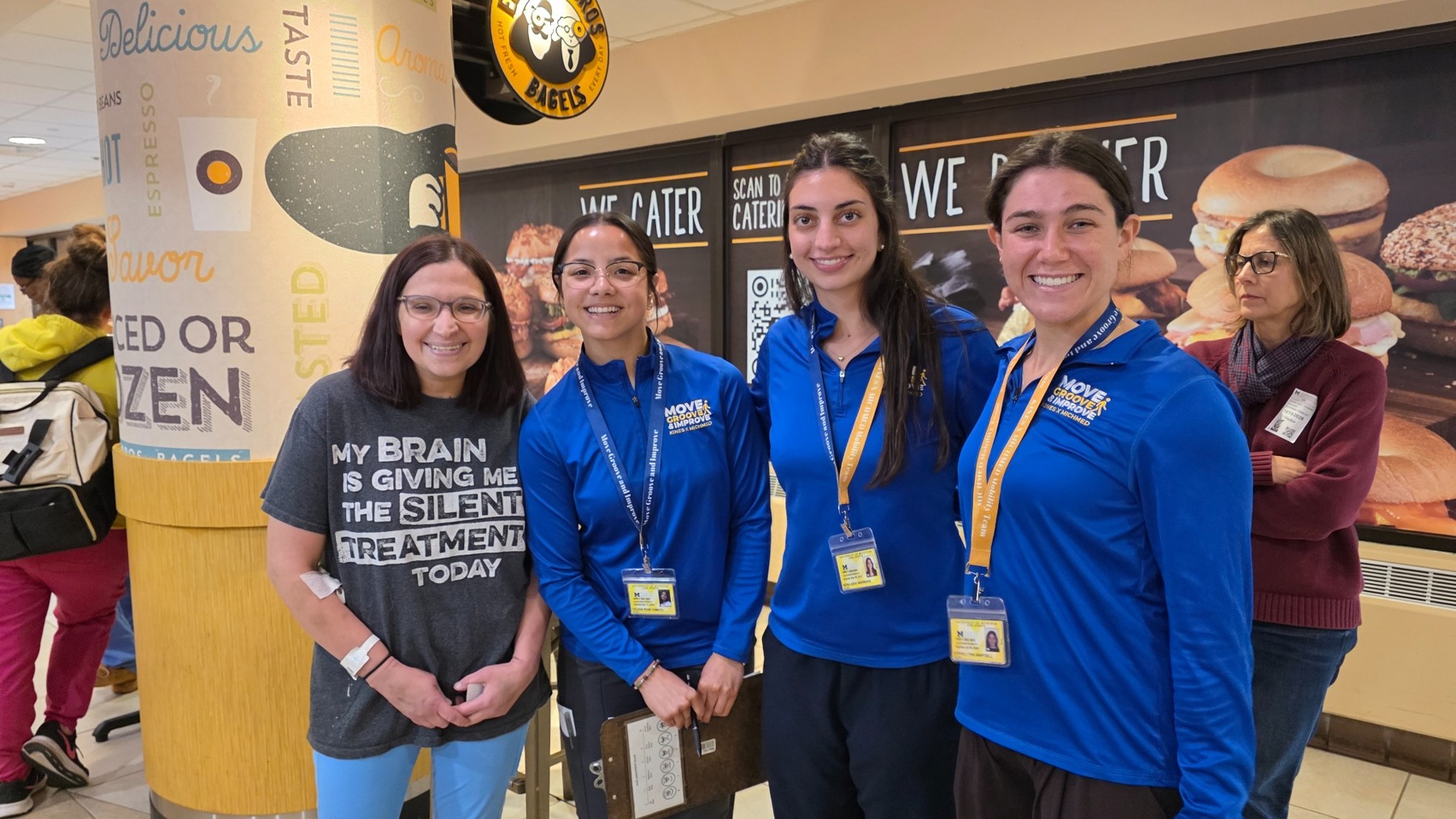
Lori and I met three young women who took a moment to visit with us. One was working toward a PhD; the others were preparing for work in therapy. We got to know them a little, took a photograph, and invited them to Arkansas. I hope they come.
Their enthusiasm gave me a bright glimpse of medicine’s future. Here were people bringing their minds, curiosity, and compassion to work that could make a difference for patients. That deserves to be celebrated.
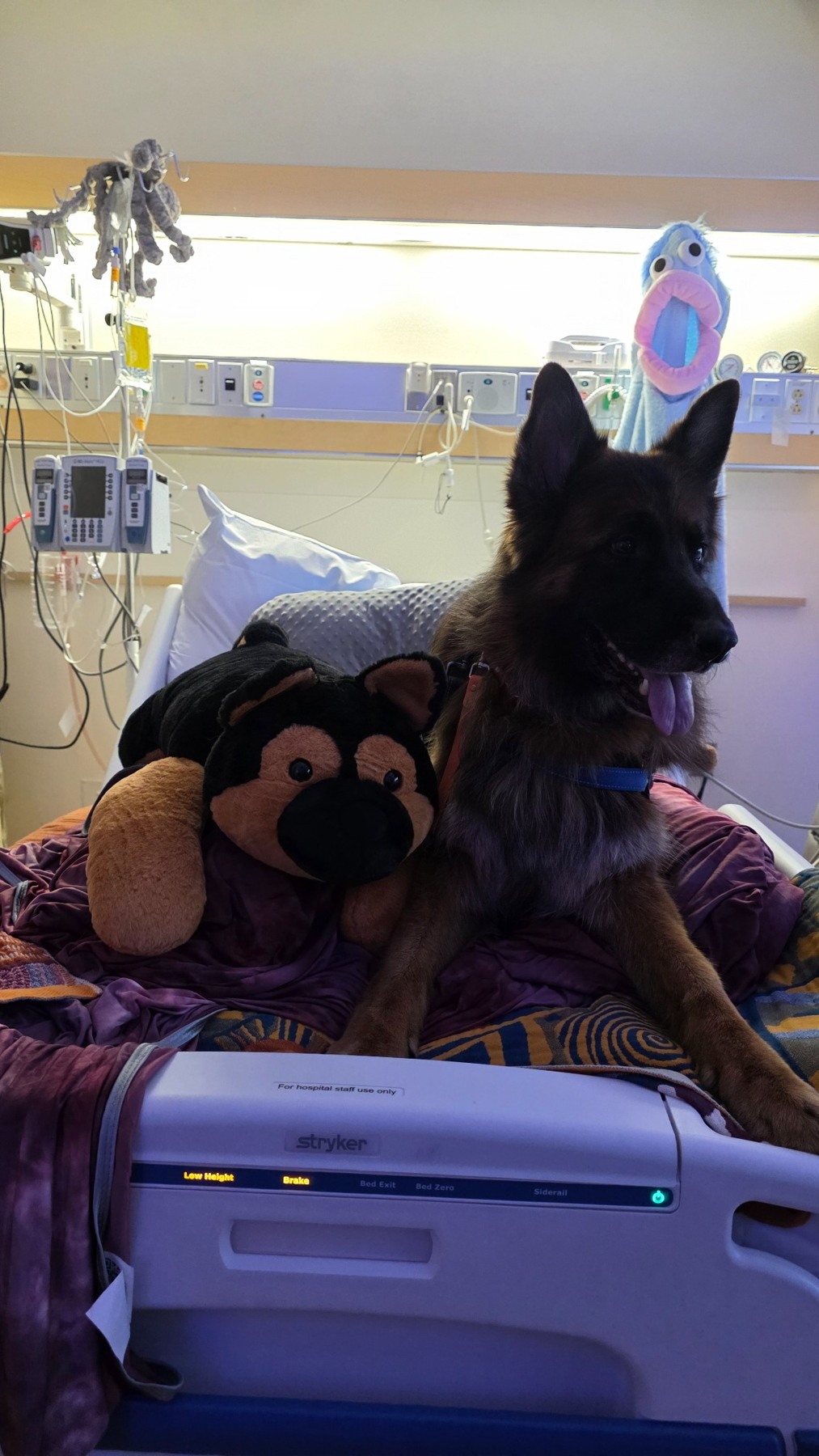
And then there is the other part of this morning’s journal—the part that is harder to say. I’m a father who is grateful for the care his daughter has received and still deeply worried about what happens next.
The history comes home, too
Lori may be doing better than when she arrived. We are thankful for that. But improvement during a hospital stay does not, by itself, resolve our family’s questions about how her long history fits into the plan for going home.
I remember roughly twenty years of that history: the years of care in Tennessee, including Vanderbilt Children’s Hospital; the weakness, falls, dehydration, and difficulty keeping food down. I remember vascular problems, stents, surgeries, ports, and PICC lines. I remember treatments that, from our experience, helped her keep going.
These are our family’s recollections and concerns. We want them considered alongside her medical records, current examinations, and the clinical judgment of her care team. We are asking how all those pieces fit together.
For Lori, the gut has been a recurring part of the story. Our concern is whether she can consistently tolerate and absorb the medicines, fluids, and nutrition she needs by mouth at home. We need to understand what has been assessed, what the plan accounts for, and what happens if the old difficulties return.
Hers is a song. Hers is a ballad. Hers is a full story that I have personally witnessed.
Lori worked hard to understand that story herself. In her younger years she read thick medical books, searching for explanations. She has years of experience recognizing her own symptoms. That knowledge deserves a hearing alongside the knowledge of the professionals caring for her.
Doctors retire or pass away. People move. Records become scattered. A child becomes an adult, and the people who knew the early chapters may no longer be there to explain them. But the patient is still here, carrying that history every day.
Several of us have tried to explain what we remember. At times, we still feel unheard. That is where my frustration comes from. I want someone to pause, listen, and help connect the pieces before we repeat a painful chapter.
The wheel and the person
That concern led me to the reassessment wheel: a proposed way to make connections in care easier to see. The patient’s own history, primary caregiver, specialists, family, and outside clinicians form a personal network. The hospital has its own network of services. Those two wheels need to communicate.
A missing spoke represents a connection to review. A record may exist somewhere, or a clinician may know an important chapter, yet that information may not reach the person making today’s decision. The wheel is an idea for improving communication, one we hope can be developed through practical use and feedback.
My disappointment is real. So is my gratitude. We have met people who have worked hard for Lori. We want the promise we saw in those three young women to flourish throughout the system. We want the expertise inside these buildings connected to the life of the person who will leave them.
Please pray for the doctors, nurses, therapists, researchers, students, and all the people who keep our hospitals working. May they have the time, patience, and imagination to listen closely. Please pray for patients and families trying to bring a complicated history into focus.
Lori’s story is still being written. We hope its next chapter brings her home with a plan that supports her life there, clear answers, and people she can turn to.
Back to our friends and the music
Lori wanted me to remind everybody that we love our musicians, especially Carolina and the many friends we have worked beside. Lori has been right there with me—taking the camera out, photographing performances, interviewing musicians and ranchers like John Weston, and helping preserve their stories. She has interviewed Carolina, been her friend, and supported her music.
Thank you, Lori. Now it is time we support you.
Carolina came into our lives years ago. I interviewed her around her visit to the Smithsonian Folklife Festival and again when she returned to Mountain View. She was a regular at Timberlane Ranch & Studios for many months. Then she moved to Eureka Springs, and I haven’t seen her nearly as much. I miss her. I miss her music.
We caught up with her at OzMoMu—the Ozark Mountain Music Festival—earlier this year. We attended as media, covering performances and recording interviews at the Basin Park Hotel in Eureka Springs, Arkansas. It was one of my favorite festivals of 2026, by far.
We photographed Carolina with Adam Collins, the festival’s artist at large, who joined her onstage. She also performed in the cave there. We had an exclusive LP interview with Moonshroom, and I want to mention Mountain Alice, Lauren Bernstein, Mary Howze, and all our friends who made that visit so enjoyable. Mary, I look forward to contacting you about returning as media. What a good time we had!
We also heard Carolina at a listening room in Arkansas with other musicians from Mountain View. Those are the moments I want to preserve—and the memories that came back as I worked on these album ideas.
I especially love “A Giant Has Fallen,” one of the first recordings Carolina made in our studio, still unreleased. I hope we can talk about releasing some of those recordings with her permission and an agreement about our work together. I would welcome a conversation about producing and publishing, too.
We would love to catch up with her on Folk Music Rewind at KWMV 88.5 FM and through American Songbook 250. We hope to follow her music in 2027, and I would love to explore having her tour with us. These are hopes for future conversations. Carolina is financing her own career, and I respect the determination that takes.
There are possibilities for our other artist friends, too: recording, visiting the show, participating in American Songbook 250, and sharing their stories through our travel spotlights. I hope we get to do more of this together.
Carolina, thank you for being a good friend to Lori. To all the musicians who have been such good friends to our family, thank you for understanding why we have taken a few weeks off. Your friendship means a great deal to us.
Please pray for our musicians. Their lives are complicated, too. Pray for the people like Lori who have worked beside us and now need that care returned to them. And pray for the people preparing to become the next generation of medical professionals. The future we met gave us hope.
I’ll keep working on the pictures, imagining album covers, and staying ready for what comes next. Sometimes a little creative work helps us find our way back to the work that needs us most.
Roots. America. And in remembrance of Charlie Kirk’s birthday, we keep his family and loved ones in our prayers. May God bless them.
This has been a long Good Morning Ozark American Journal, but it is what is on my mind. Thank you for reading. Thank you for giving us room to take a break and care for our daughter. We believe. We care. We imagine.
Put your faith in God. Stay sharp. Imagine tomorrow today.
—Al Timberlane